The UNHCR defines being a refugee as “…someone who has been forced to flee his or her country because of persecution, war or violence. A refugee has a well-founded fear of persecution for reasons of race, religion, nationality, political opinion or membership in a particular social group. Most likely, they cannot return home or are afraid to do so. War and ethnic, tribal and religious violence are leading causes of refugees fleeing their countries.” No one becomes a refugee by their own choosing. They’re a lot of times forced to leave their homes to save their lives. When they make it out of their home countries it’s not the end of the rough and dangerous journey ahead. Today 68.5 million individuals have been forcibly displaced worldwide as the result of many things like persecution, conflict, and human rights violations in their home countries.
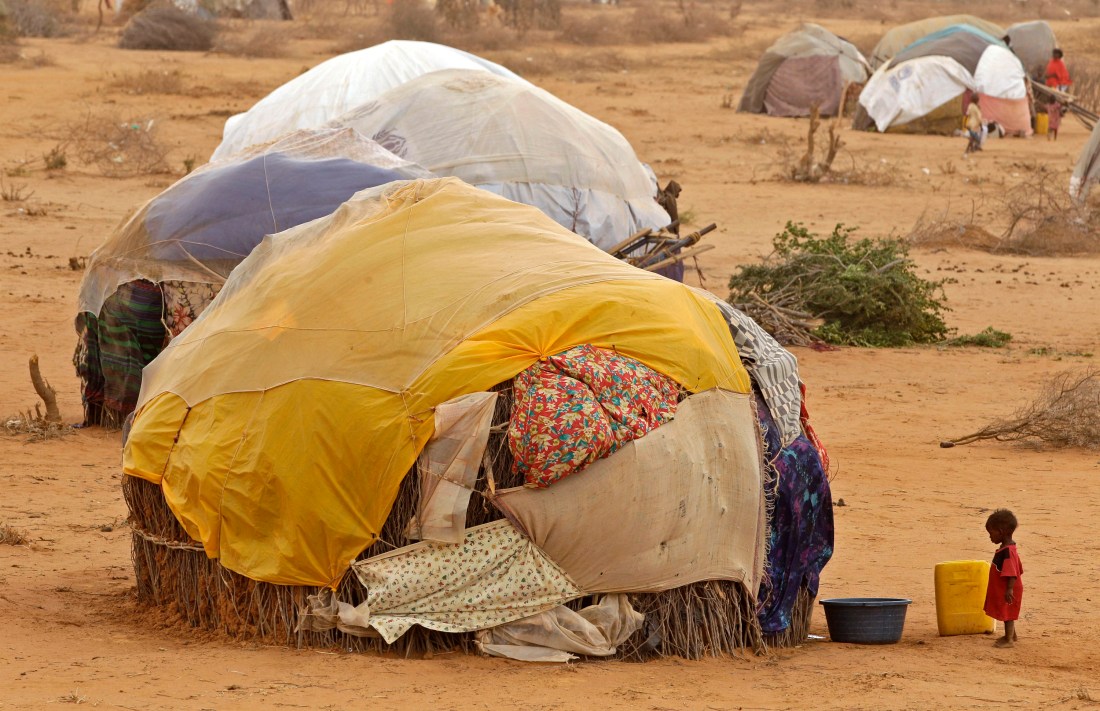
Not all these people are refugees though. Worldwide there are 25.4 million refugees, the highest number the worlds seen to date. While not all refugees live in refugee camps roughly 2.6 million do! That’s more than the population of some states in America like Idaho, South Dakota, North Dakota, Maine, Vermont, West Virginia and more! Think about if you were one of those people right now and the things you’d bring with you, and where you would go when fleeing. For 2.6 million people there weren’t many options at all forcing them to turn to live in a refugee camp. With limited spaces in the camps and a seemingly never ending demand for more space many camps open up overflow areas that end up just as large as the main camps. While reading City of Thorns by Ben Rawlence I read from a perspective of different people living in the refugee camp. One of the main characters that stuck out to me what Guled. He first arrived at the camp at a young age and didn’t really know much about how things worked in the camp. “When he asked about work, Noor laughed. Guled learned that employment in Kenya was forbidden. Like many governments anxious about asylum seekers, Kenya didn’t want Somalis taking Kenyan jobs, so all formal work with a decent salary, with the agencies and the UN, was reserved for Kenyans”. I learned that the refugees in the camp struggled to find work and how hard it was for them to make a living. They were forced to work the “low-class” jobs or jobs throughout the camps. Everyone traveling to the camps were already in tough places in their lives, many had little money or belongings left to their names. In the camps instead of always paying for things with money, people barter for items and try and trade things in the market. Life is lived so differently in refugee camps than many of us can ever relate to. Some refugees that don’t end up in camps apply to come to America and other countries. Even refugees that have lived in camps for years still apply to other countries to start a new life.
-
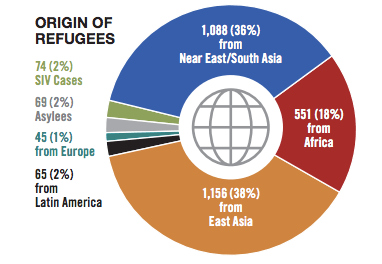
Origin of refugees in Illinois
The security vetting process that refugees need to go through when applying to come to America can take between 18-24 months to MAYBE get approved. In Illinois there is a refugee program known as “The refugee resettlement program”. Sense 1975 the program has resettled more than 126,000 refugees from 86 countries into Illinois. Illinois currently has about 3,048/70,000 refugees admitted into the United states living within the state. The Illinois program offers many services to help the refugees get started in America. They offer social work services, doctor services, mental health services, and many more that a majority of the refugees take advantage of. A Majority of the refugees in Illinois originate from around East Asian and South Asian countries. By looking online and contacting local organizations you can figure out how you can help local refugees and refugees around the world.
Links to learn more:
https://www.unrefugees.org/refugee-facts/what-is-a-refugee/
http://www.chicagorefugee.org/refugee-services.html

 Colby's Chat