

For my third SAMO of the year I went to the Chicago Cultural Center. While I was there I saw many different exhibits. At the Chicago Cultural Center they don’t just have one exhibit, they have many different traveling exhibits so the art displayed there changes periodically. On Wednesday March 13th me and my mom drove down to the city to visit the museum. It took us a little bit longer than expected to drive into the city because I got us lost, but after finding our way again we found the museum. Finding parking was easy for us because we found a parking garage up the street but there is no designated parking for the museum. The Cultural Center and all the exhibits were free to go see you just walk in. One of the exhibit we walked through was Arts of Life. It was an exhibit featuring artwork made by adults with disabilities in a day program. I really enjoyed seeing the art in this exhibit because I don’t think I’ve ever seen an art exhibit exclusively featuring artists with disabilities. This reminded me of Willing to be Disturbed by Margaret Wheatley it says “We live in a dense and tangled global system. Because we live in different parts of this complexity, and because no two people are physically identical, we each experience life differently. It’s impossible for any two people to ever see things exactly the same.” Although the artists have differences they don’t let that stop them from being artists. The art was beautiful and very colorful.


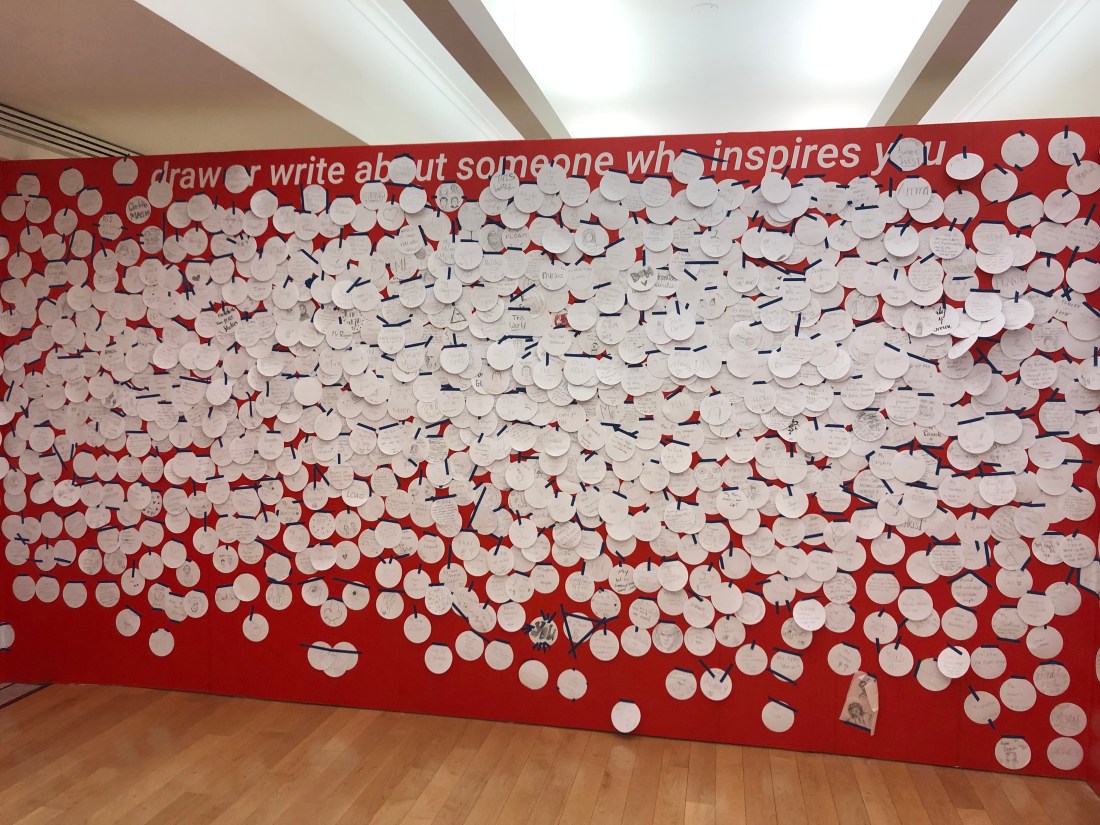
The exhibit also featured a wall that allowed people to write what inspires them. Although when I went there was no more room on the wall I got to read what inspires everyone else who had been there. People wrote about people that inspire them in their lives and the things that motivate them. It really made me think about the exhibit as a whole because although the artists have disabilities they don’t let that stop them and they find inspiration in things enough to make art.
Another exhibit I saw while there was Bronzeville Echoes: Faces and Places of Chicago’s African American Music. They highlight great Chicago musicians that changed the music scene here. I learned so much about the history and influence of African American music in Chicago. Before jazz and blues music became popular Ragtime music was big, especially in Chicago. The exhibit highlighted Florence Mills. An African American singer and dancer became famous after coming to Chicago in 1916. In a time when not many women, let alone African American women, were making a name for themselves Florence Mills became an instant star. I had ever known about the rich history behind African American music in Chicago, the exhibit really taught me a lot. Today, no recordings of Florence Mills singing exist because none of her performances were ever recorded. Although she had major influence in the Harlem Renaissance her name is largely forgotten when thinking back to the artists that influenced jazz and ragtime music.


To Recap it all…
What: Chicago Cultural Center
Where: 78 E Washington St, Chicago, IL
How did you get there: Drove with my Mom
How much did it cost? It was FREE!
Would you recommend it to other CST learners? Yes! It was such a cool experience seeing all the different exhibits the Chicago Cultural center had to offer

 Colby's Chat