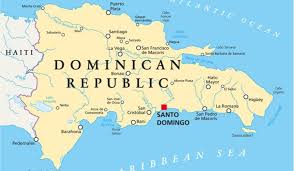
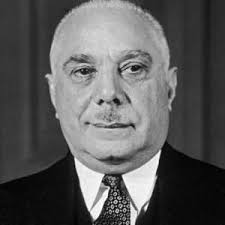
Rafael Trujillo was the dictator of the Dominican Republic from February 1930 until he was assassinated in 1961. He ruled the country with an iron fist. Rebel groups began to form in opposition of Trujillo. A group called the “Movement of the Fourteenth of June” emerged and was started by 3 of the four Mirabal sisters, Patria Mercedes Mirabal Reyes, María Argentina Minerva Mirabal Reyes, and Antonia María Teresa Mirabal Reyes. They strongly opposed Trujillo’s regime and showed it by making weapons such as guns and bombs to use in a revolt against the government. They also passed out pamphlets and writings that went against the regime. In the book In the Time of the Butterflies by Julia Alvarez she tells the story of the Mirabal sisters also known as “Las Mariposas” (“The Butterflies”). She tells their story from the point of view of the surviving Mirabal sister who did not join the rebel group, Dede Mirabal.
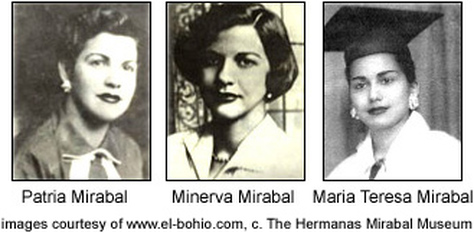
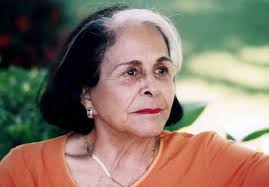
In the Person Sitting Next to You by Ross Snyder it says “Who is the person sitting next to you? You might say a name, and describe how tall he is, and the color of his eyes and hair. But none of these things are what the person is. A person is invisible activities” (Snyder 1). This passage reminded me a lot of the Mirabal sisters. Many people underestimated them. They are women, and it was in a time that many people believed women were not capable of such revolutionary ideas. The Mirabal sisters were joined in their rebel group by many other people including their husbands. Trujillo sent out direct orders for the Butterflies and their husbands arrests. He managed to only arrest two of them, Maria Teresa and Minerva, he also arrested all three of their husbands. “Then there had been the silence that always followed any compromising mention of the regime in public. One could never be sure who in a group might report what to the police. Every large household was said to have a servant on double payroll” (ITOB 94). Trujillo’s tight rein over the Dominican Republic began to be noticed on a more international scale. The Organization of American States began investigating his treatment of the people and they went to the prisons to interview political prisoners. After The Organization of American States “condemned” the actions of Trujillo in 1960 and he released Maria Teresa and Minerva. Their husbands were still in jail at La Victoria Penitentiary in Santo Domingo. The three Butterflies died on November 25th, 1960 on their way back from visiting their husbands in prison. Before leaving to visit their husbands before they died they were warned by many different people including their surviving sister to not travel all together. They were warned this because they were already a target for Trujillo but together, they were a larger target. Trujillo sent his men to kill the sisters in an attempt to stop their impact on the country. Patria, Minerva, Maria Teresa, and their driver de la Cruz were killed and, dead, put back in their car and pushed over the side of a mountain road to look like an accident. It wasn’t until after Trujillo was assassinated that the government admitted that they were killed. In 1999 the United Nations General Assembly designated November 25th as the International Day for the Elimination of Violence against Women, in honor of the sisters.
This winter break I got the opportunity to go to the Dominican Republic. Unfortunately I did not get the chance to see the Mirabal Sisters Home Museum because it was a little to far away. I did although get to see around the beautiful country which would not have been possible without the Mirabal sisters and their fight to take down the dictatorship. And in a strange turn of events, while staying in the DR, my family and I rented a beautiful modern home owned by (what we have come to believe) a descendant of Major General Antonio Imbert Barrera, former President if the DR and one if the men responsible for the assassination of Rafael Trujillo. Imbert was considered a national hero, and professed to be the one who fired the final shots, killing the corrupt dictator. The Dominican Republic is now no longer a dictatorship and although some parts are still unsafe to go to, it is a thriving tourist destination.


 Colby's Chat