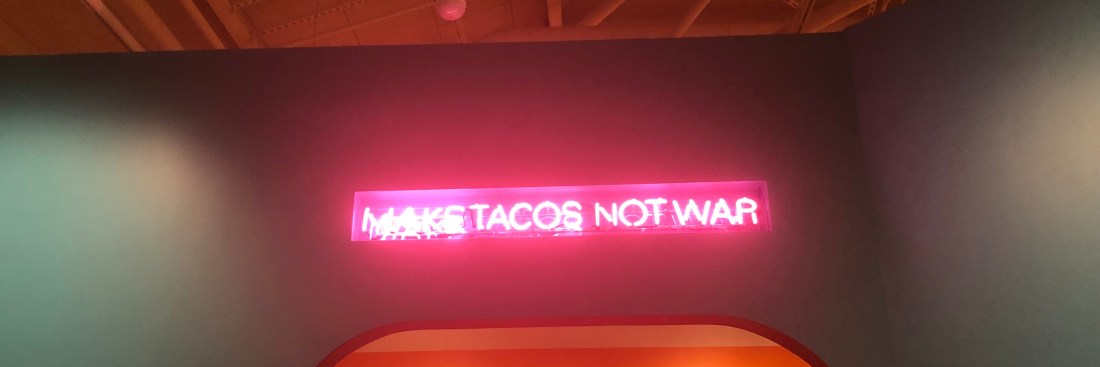
For my second SAMO of the year, I went to the National Museum of Mexican Art on January 4th, 2019. I drove to the museum with my Mom and we were able to park on the street right outside the museum. I had never heard of the museum until I re-read the list of pre-approved SAMO places to go to. To me, it looked like one of the most interesting ones on the list. The museum itself is a red brick building and it’s not as big as many of the other museums in Chicago. Admission to the museum was free and all we had to do was sign in. There were only a couple other people in the museum because it had just opened, so we had the whole place to ourselves! Instantly, I saw that all the art pieces had stories behind them and symbolized more than just pretty paintings.
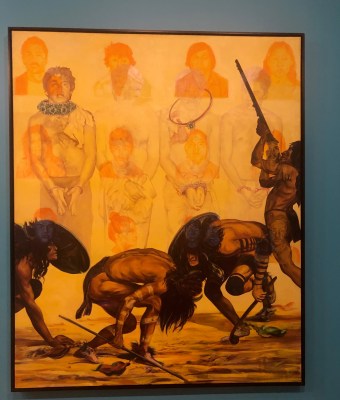
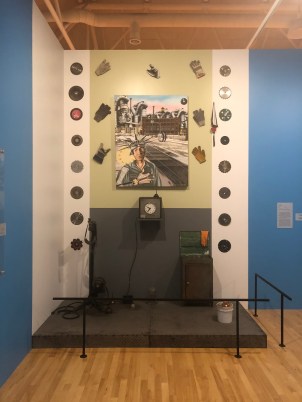
The painting “Savages and Glitter” by John Valadez, depicts the anti- immigration rhetoric in the United States. The term “glitter”in the title symbolizes the immigrants ideas of a better life. The painting shows how difficult and dangerous it is and what the immigrants face as they attempt to cross the border. Even though it was painted in 1986, it is still extremely relevant and powerful today. “R.S.I” By Marcos Raya, also depicts the life of immigrants. Marcos Raya lived in Chicago in a time when most people worked in factories. R.S.I stands for repetitive stress injuries. These were the injuries often sustained by the factory workers. You can see in the painting the man’s hand seems to be made of machine parts. This is because the factories hired people and had them perform the same machine like motions every day. These industrial workers also worked in dirty and unsafe work environments striving to reach the American dream.
There was also a whole room of art pieces about the neighborhood in which the museum is located in. The museums neighborhood of Pilsen is predominantly Mexican. Culturally significant bright colors and murals painted on many of the homes in the neighborhood were a part of the reason Mexican people moved to Pilsen. The room also highlights the attempts of developers to gentrify the homes in the area. Painting them grey. The museum calls this color “gentrification grey” because it’s covering up the bright, colorful history of the neighborhood. This reminded me of a quote in the Cycle of Socialization by Bobby Harro that says “What can I do to change it? It is a huge phenomenon, and my small efforts won’t count for much.’ Many of us choose to do nothing because it is (for a while) easier… besides it’s frightening to try and interrupt something so large” (Harro 3).
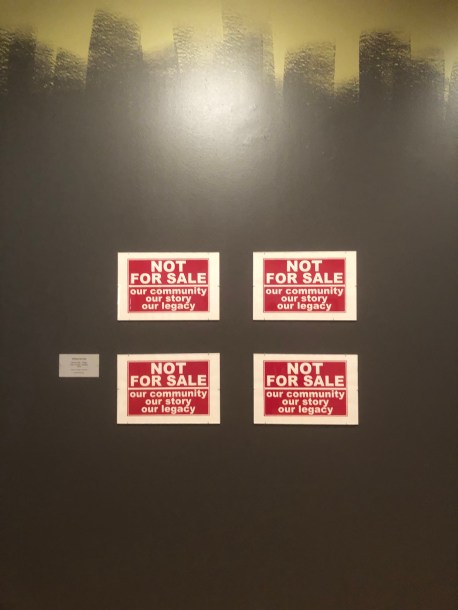
Even though it may seem like nothing can be done to prevent the washing out of all the bright colors, the museum has a whole room dedicated to highlighting what is going on in the neighborhood. These artists featured are using their art to inform a wider audience about what they see happening. Even though the “revamping” of the neighborhood seems like something that can’t be altered and the art pieces seem like a small response, they are not. They start a conversation about if it is really right to lose all of the history that goes with the houses and neighborhood. Going to the National Museum of Mexican Art was a new and exciting experience for me. I’m grateful that instead of sleeping in I made the short drive to the city to visit the museum. I learned not only more about the art there but also more about the fascinating Mexican heritage and the history of Chicago.
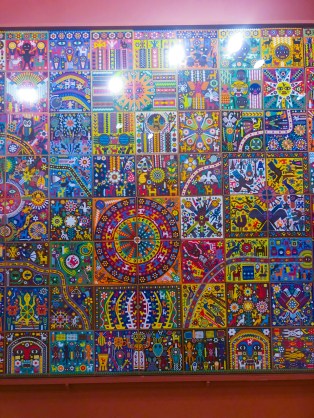
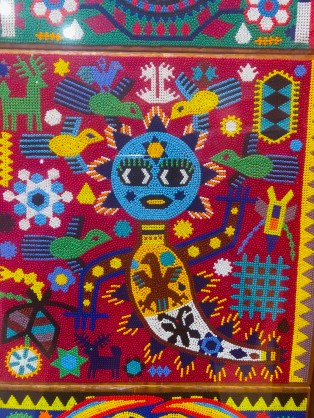
To Recap it all…
What: National Museum of Mexican Art
Where: 1852 W 19th St, Chicago, IL
How did you get there: Drove with my Mom
How much did it cost? It was FREE!
Would you recommend it to other CST learners? Yes! I learned a lot about Mexican Heritage that I didn’t know before and the art was beautiful.

 Colby's Chat