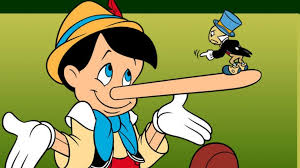
How does someone develop their own conscience over time? How do you know what is the right and wrong thing to do? When I was younger I watched many different Disney movies like Pinocchio. In Pinocchio every time he lies his nose grows longer. Pinocchio’s conscience is named Jiminy Cricket and he guides Pinocchio into trying to become a real boy. In the movie there’s a quote that says “Always let your conscience be your guide.” At the time it went right over my head. Later in life I realized that my conscience is the voice in my head and if I ever don’t know what to do I should “let my conscience be my guide”.
The voice in your head guides you through decisions you have to make. Whether you listen to the voice or not it’s your conscience is basically the more moral version of you. Margaret Wheatley explains in Willing to be Disturbed “Sometimes we hesitate to listen for differences because we don’t want to change. We’re comfortable with our lives and if we listened to anyone who raised questions, we’d have to get engaged in changing things” (Wheatley 2). Sometimes when we listen to our conscience we come to a realization that we may be heading or about to head down the wrong path, which can make us uncomfortable because we aren’t “willing to be disturbed”.
Growing up I never viewed the voice in my head as a “voice in my head” or as my conscience. I just thought I could talk to myself and no one else could hear it. Anytime people would bring up the voice in their head telling them right from wrong I thought I didn’t have one. I didn’t realize until I was older that the voice is my head is my conscience and it talks to me all the time. Now I know that I use my conscience in every decision that I make. At Glenbrook North I’ve been in radio for almost 2 years now. When I first started it was really hard to learn how to work some of the computer programs and how to even complete an assignment correctly. Now that I’ve been in the class for longer I sometimes see the students who’ve been in the class for a shorter period of time then me not understanding how to do the things I used to not understand. Even though I understand how to work those things now, instead of getting annoyed that they don’t know I try and help them with their projects and teach them how to do it in the future. I always try my best to help them because I remember what it was like when I didn’t know how to do those things also.
Acting out of good conscience is a no brainer for some people, like Chiune Sugihara. In The Japanese man who saved 6,000 Jews with his handwriting David Wolpe tells Chiunes brave story.
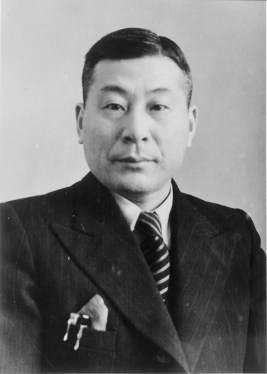
During World War 2 Chiune Sugihara followed his conscience and did what he thought was right to save thousands of Jewish people fleeing occupied Poland. His bosses told him that, under no circumstance, could he be writing visas for them but after he thought about it he decided that was against his morals and he was going to do it anyway. “I told the minister of affairs it was a matter of humanity. I did not care if I lost my job. Anyone else would have done the same thing if they were in my place” (Wolpe). Chiune has such a good conscience that he even tries to dismiss what he did by saying anyone would have done it, but not everyone has a strong enough conscience to guide them through something like that.
Not everyone can have a real life version of their conscience to talk to like Pinocchio. Sometimes we don’t know what’s the right thing to do and it can be hard to hear your conscience. Sometimes the right thing to do can be confusing. That’s why you can discuss your decisions with other people and along with their advice and following your own conscience you can find your way. “We weren’t trained to admit we don’t know” (Willing to be Disturbed). Talking through your ideas and seeking out advice when you don’t know something is not a bad thing. It’s a necessary thing to do to grow our conscience and realize that we can’t do everything alone in life, sometimes we need a little help.

 Colby's Chat